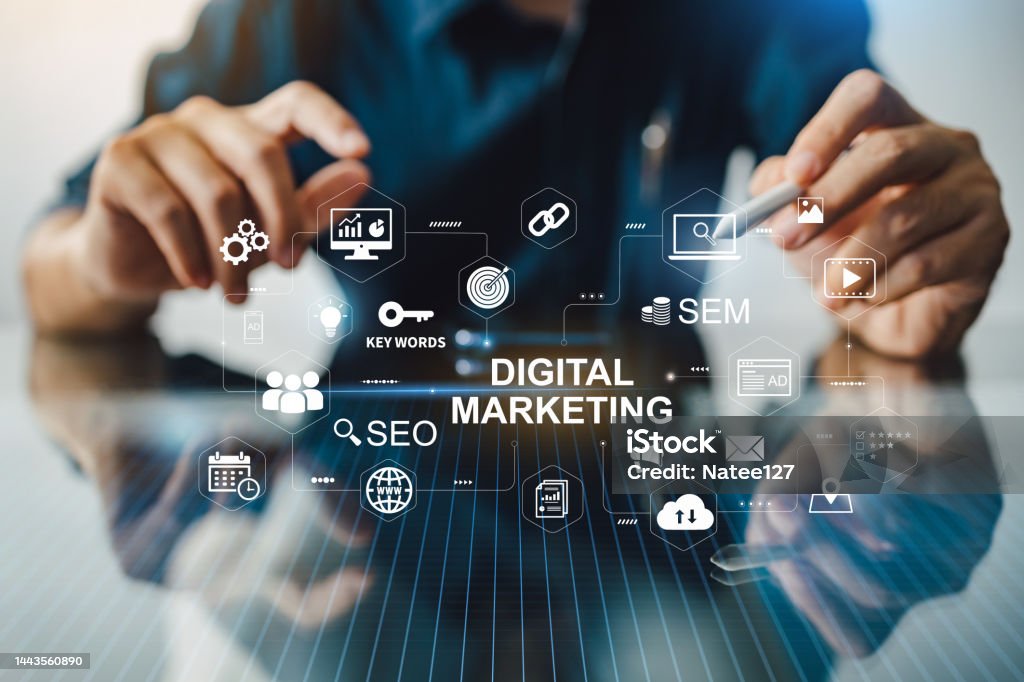
In today’s fast-moving digital world, businesses are no longer dependent only on traditional marketing methods like newspapers, TV, or billboards. The internet has completely changed how brands connect with people. This is where digital marketing comes in. But alongside it, another term is becoming popular — performance marketing. While they are related, they are not the same.
Let’s understand both in a simple and practical way.
What is Digital Marketing?
Digital marketing is the process of promoting products or services using digital platforms such as:
Search engines (Google)
Social media (Instagram, Facebook, LinkedIn)
Websites and blogs
Email marketing
Mobile apps
In simple words, any marketing done through the internet or electronic devices is digital marketing.
Key Types of Digital Marketing
Search Engine Optimization (SEO) Improving your website to rank higher on Google.
Social Media Marketing (SMM) Promoting content on platforms like Instagram, Facebook, etc.
Email Marketing Sending emails to customers for promotions or updates.
Pay-Per-Click Advertising (PPC) Running ads where you pay for each click.
Example
If you run an Instagram page and post content to grow your brand — that’s digital marketing. If you write blogs to bring traffic to your website — that’s also digital marketing.
What is Performance Marketing?
Performance marketing is a part of digital marketing where you only pay for specific results.
These results can be:
Clicks
Leads
Sales
App installs
In simple words: 👉 No result = No payment (or minimal cost)
Common Channels in Performance Marketing
Facebook Ads
Google Ads
Affiliate marketing
Influencer campaigns (based on results)
Example
If you run a Facebook ad and pay only when someone clicks or buys something — that’s performance marketing.
Key Difference Between Digital Marketing and Performance Marketing
Factor
Digital Marketing
Performance Marketing
Definition
Overall marketing using digital platforms
Result-based marketing strategy
Focus
Brand awareness + engagement + growth
Measurable results (clicks, leads, sales)
Payment Model
Fixed budget or ongoing investment
Pay only for performance
Goal
Long-term brand building
Short-term measurable outcomes
Risk
Higher (no guaranteed results)
Lower (you pay for results)
Examples
SEO, content marketing, social media posts
PPC ads, affiliate marketing
Simple Way to Understand
Digital Marketing = Full System
Performance Marketing = Result-Based Part of That System
👉 Think of it like this: Digital marketing is the whole game, while performance marketing is scoring goals in that game.
Which One Should You Choose?
If you want long-term growth and brand value → Go for Digital Marketing
If you want quick results like leads or sales → Go for Performance Marketing
Best strategy → Use both together
Conclusion
Digital marketing is a broad field that includes all online marketing activities, while performance marketing is a specialized approach focused on measurable results. Businesses that combine both strategies can achieve strong brand presence along with consistent conversions.
If you’re looking for an affordable wireless mouse without compromising on basic performance, you’re in the right place. Whether you’re a student, office worker, or casual user, a budget-friendly mouse can handle everyday tasks like browsing, document work, and light productivity with ease. In this list, we’ll explore some of the best wireless mice under ₹300 that offer great value for money.
The ZEBRONICS Freego wireless mouse is one of the most reliable options in the ultra-budget segment. Designed with everyday users in mind, it offers a comfortable grip that makes it suitable for long hours of use, whether you’re working or studying.
With a 3200 DPI sensor, this mouse provides decent precision for routine tasks like web browsing, editing documents, and navigating your system. It features a simple 3-button layout (left, right, and scroll wheel), keeping things minimal and easy to use.
One of its standout features is the power-saving mode, which helps extend battery life by reducing energy consumption when the mouse is idle. The USB nano receiver ensures a plug-and-play experience—just connect it to your laptop or computer and you’re ready to go, no additional setup required.
It also performs well on most surfaces like mouse pads, wooden tables, and standard desks, making it a practical choice for home and office use.
The history of Ambala is a fascinating journey through ancient settlements, medieval power struggles, colonial military expansion, and post-independence development. Located in the northern Indian state of Haryana, Ambala has long served as a strategic, cultural, and commercial center in North India. Its geographical position—close to Punjab, Himachal Pradesh, and Uttar Pradesh—has made it a gateway city with immense historical importance.
From ancient legends and Mughal administration to British cantonment development and its role in modern India, Ambala’s past reflects the broader narrative of North Indian history.
Ancient Origins and Etymology History of Ambala
The origin of the name “Ambala” is surrounded by local legends and historical interpretations. One popular belief suggests that the city was named after “Amba Rajput,” a local ruler who is said to have founded the settlement. Another theory connects the name to Goddess Amba, an incarnation of Goddess Durga, indicating the region’s early religious roots.
Archaeological findings in nearby areas suggest that this region may have been inhabited since ancient times. Given its location between the rivers Yamuna and Sutlej, the land around Ambala was fertile and suitable for early settlements.
Though there is limited documented evidence from the ancient period, historians believe the region was influenced by various northern Indian kingdoms that ruled parts of present-day Haryana and Punjab.
Ambala During the Medieval Period
The medieval history of Ambala is closely tied to the rise and fall of powerful dynasties in North India. During the 12th and 13th centuries, the region came under the control of the Delhi Sultanate. Its proximity to Delhi made it strategically important for rulers who wanted to secure trade routes and military pathways.
Under the Mughal Empire, Ambala became part of the administrative framework of northern India. The Mughals developed infrastructure, trade networks, and agricultural systems in the region. Due to its fertile plains and strategic location, Ambala served as a connecting route between Delhi and Lahore, which was one of the most significant cities in the Mughal Empire.
After the decline of the Mughals in the 18th century, the region experienced political instability. Various powers, including the Marathas and local Sikh chiefs, attempted to gain control. Eventually, the Sikh Misls (confederacies) exerted influence over the area before the arrival of the British.
British Rule and the Establishment of Ambala’s history
One of the most defining chapters in the history of Ambala began with British rule. After the Second Anglo-Sikh War in 1849, the British East India Company gained control over Punjab and surrounding areas, including Ambala.
In 1843, even before full annexation, the British had established the Ambala Cantonment, recognizing the city’s strategic military value. The cantonment soon became one of the largest and most important military bases in northern India. It was designed to house British troops and serve as a defense post against potential uprisings and external threats.
Ambala played a significant role during the Revolt of 1857, also known as India’s First War of Independence. The cantonment was a key military center from which the British managed troop movements. Though unrest occurred in various parts of North India, the British maintained control over Ambala.
The British also developed railways, roads, churches, and administrative buildings in the city. The introduction of the railway system transformed Ambala into a major railway junction, strengthening its commercial and military significance.
Ambala’s Role in India’s Freedom Movement
While Ambala was a stronghold of British military power, it was not untouched by India’s freedom struggle. Political awareness grew in the early 20th century, and local leaders participated in national movements led by figures such as Mahatma Gandhi.
During movements like the Non-Cooperation Movement and Quit India Movement, people in Ambala joined protests and demonstrations against colonial rule. The city’s strategic location meant that it was closely monitored by British authorities, especially due to the presence of the cantonment.
By the 1940s, as India’s independence became inevitable, Ambala witnessed increasing political activity and communal tensions, especially as the Partition of India approached.
Partition of 1947 and Its Impact on Ambala
The Partition of India in 1947 deeply affected Ambala. With the creation of Pakistan and independent India, massive population exchanges took place across Punjab and Haryana.
Ambala, being close to the newly formed border, became a transit point for refugees. Thousands of displaced families arrived from West Punjab (now in Pakistan), bringing with them new skills, traditions, and businesses. This migration significantly shaped the demographic and cultural character of the city.
The resettlement of refugees contributed to the growth of trade and industry in Ambala. Many refugee families established businesses that later flourished, particularly in textiles and scientific instruments.
Post-Independence Development and Formation of Haryana
After independence, Ambala initially became part of the state of Punjab. However, in 1966, the state of Haryana was carved out of Punjab based on linguistic divisions. Ambala was incorporated into the newly formed state of Haryana.
As Haryana developed into an agriculturally and industrially progressive state, Ambala emerged as an important urban center. Its cantonment continued to serve as a vital base for the Indian Army and Indian Air Force.
The city’s railway junction remained one of the busiest in North India, connecting major routes such as Delhi–Kalka and Delhi–Amritsar.
Industrial and Commercial Growth in Modern Ambala
The modern history of Ambala is marked by rapid commercial and industrial expansion. The city gained national recognition as a hub for scientific instruments and laboratory equipment manufacturing. Educational institutions across India source laboratory tools from Ambala, earning it the nickname “Science City of India” in trade circles.
In addition to scientific instruments, Ambala became known for:
Textile wholesale markets
Metal utensils and home goods
Pharmaceuticals
Small-scale manufacturing industries
The entrepreneurial spirit of its residents, many of whom were refugees after Partition, played a significant role in shaping Ambala’s economic identity.
Religious and Cultural Heritage
Ambala’s history is also reflected in its religious sites. Gurudwaras, temples, mosques, and churches coexist peacefully, symbolizing communal harmony. Sites such as Badshahi Bagh Gurudwara and Holy Redeemer Church stand as reminders of the city’s diverse spiritual heritage.
This blend of faiths and traditions has been shaped over centuries by migration, trade, and political change.
Conclusion: The Historical Legacy of Ambala
The history of Ambala is a rich tapestry woven with ancient legends, medieval conquests, colonial military strategies, freedom struggles, and post-independence growth. From its strategic importance during the Mughal era to its transformation into a major British cantonment, and from the turbulence of Partition to its rise as a commercial powerhouse, Ambala has continuously evolved.
Today, Ambala stands as a symbol of resilience and progress. Its historical roots continue to influence its cultural identity, while its modern industries and military presence ensure its ongoing relevance in India’s development story.
For historians, travelers, and residents alike, Ambala’s past offers valuable insights into the broader narrative of North Indian and Indian history.
In today’s fast-growing digital world, businesses rely heavily on online platforms to reach their customers. From social media marketing to search engine optimization, digital marketing has become an essential skill for students, entrepreneurs, and professionals. If you are planning to build a career in this field, choosing the best digital marketing institute in Ambala is the first step toward success.
A professional institute not only provides theoretical knowledge but also offers practical training, live projects, and industry insights that help students gain real-world experience.
Why Choose a Internet Marketing Course in Ambala?
Ambala is quickly becoming a hub for professional education and skill development. Many institutes now offer advanced digital marketing programs designed to help students stay competitive in the job market.
These programs are ideal for students, business owners, job seekers, and freelancers who want to develop strong digital marketing skills.
Features of the Best Internet Marketing Institute in Ambala
When selecting the top digital marketing training institute in Ambala, you should consider several important factors.
1. Practical Training The best institutes focus on practical learning. Students get the opportunity to work on real campaigns and projects to understand how digital marketing works in real business scenarios.
2. Updated Course Modules A good digital marketing training in Ambala should include updated topics such as:
Search Engine Optimization (SEO)
Social Media Marketing (SMM)
Google Ads (PPC)
Content Marketing
Email Marketing
Affiliate Marketing
Web Analytics
YouTube Marketing
These modules ensure students gain complete knowledge of modern digital marketing strategies.
3. Experienced Trainers Learning from experienced professionals helps students understand the latest trends and industry practices.
4. Certifications Top institutes provide recognized certifications that help students build credibility and improve job opportunities.
5. Placement Assistance The best digital marketing institute in Ambala also offers placement support, internships, and career guidance.
Career Opportunities After Digital Marketing Training
Completing a digital marketing course in Ambala opens doors to multiple career paths. Some of the most popular job roles include:
With the growing demand for digital marketing professionals, companies are actively looking for skilled candidates who can help them grow their online presence.
Who Should Join Digital Marketing Training?
A digital marketing institute in Ambala is suitable for:
Students looking for career-oriented skills
Business owners wanting to grow their brand online
Job seekers aiming for high-demand careers
Freelancers interested in working with global clients
Marketing professionals upgrading their skills
This field offers flexibility, creativity, and high earning potential.
Final Thoughts
Choosing the best digital marketing institute in Ambala can play a crucial role in shaping your career. A good institute will provide practical training, expert mentorship, and industry exposure that helps you become a skilled digital marketer.
If you want to build a successful career in online marketing, enrolling in a professional digital marketing training institute in Ambala is a smart investment for your future. With the right guidance and skills, you can unlock countless opportunities in the digital world.
In today’s digital economy, data is one of the most valuable assets a company can own. Every online search, purchase, click, and interaction generates information. Organizations collect this data to understand customers, improve operations, and increase profitability. However, raw numbers alone are not useful. They must be processed, interpreted, and transformed into meaningful insights. This is the role of Data Analytics.
Data analytics helps businesses make smarter decisions based on facts rather than assumptions. It combines technology, statistical methods, and analytical thinking to uncover patterns and trends. As industries become more technology-driven, analytics has evolved into a core business function rather than just a support activity.
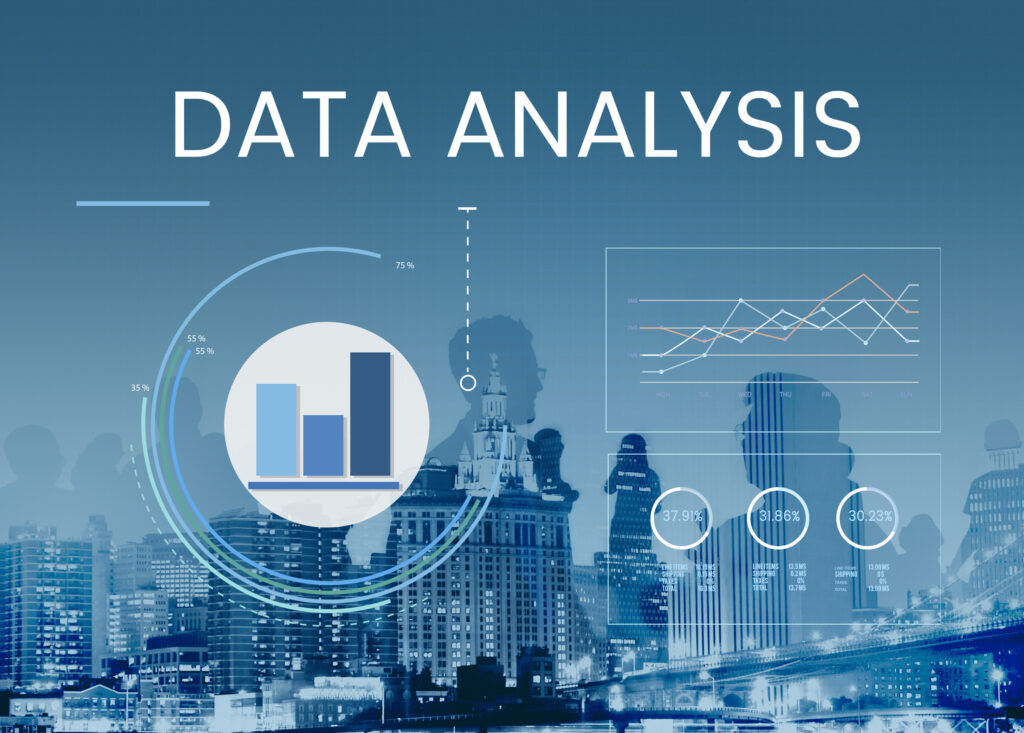
Business data analysis
What is Data Analytics?
Data analytics is the process of examining datasets to draw conclusions about the information they contain. It involves collecting, cleaning, organizing, and analyzing data to support decision-making.
The example of Data Science, global companies like Amazon analyze customer browsing and purchasing patterns to recommend relevant products. Similarly, Business intelligencestudies viewing habits to personalize content suggestions. These companies rely on advanced analytics to enhance customer experience and drive growth.
Data analytics does not operate in isolation. It connects closely with fields such as Business Analytics, Big Data Analytics, and Data Science, each contributing unique techniques and perspectives.
The Relationship Between Data Analytic and Business Analytics
While data analytics focuses on interpreting raw data, Business Analytics applies those insights directly to business strategy. It emphasizes performance improvement, operational efficiency, and competitive advantage.
Business leaders use analytics dashboards and reports to evaluate sales performance, customer retention rates, and marketing outcomes. Instead of guessing what might work, organizations use evidence-based strategies to guide their actions.
For instance, companies use analytics platforms like Tableau and Power BI to convert complex datasets into easy-to-understand charts and dashboards. This process, known as Data Visualization, makes insights accessible even to non-technical stakeholders.
The Role of Big Business Intelligence
As technology advances, organizations now handle massive volumes of structured and unstructured information. This is where Big Business Intelligence becomes essential.
Big data refers to extremely large datasets that traditional systems cannot process efficiently. These datasets may come from social media platforms, IoT devices, mobile applications, or customer databases. Managing and analyzing such large volumes requires advanced tools and cloud computing platforms like Amazon Web Services.
Without big data technologies, many modern business innovations would not be possible.
Predictive Analytics: Looking Ahead
While traditional analytics explains what happened in the past, Predictive Analytics focuses on what might happen in the future. It uses historical data, statistical algorithms, and machine learning models to forecast outcomes.
Retail companies predict demand for products. Financial institutions assess credit risks. Healthcare providers forecast patient admission rates. Predictive models allow businesses to prepare for upcoming opportunities and challenges.
This approach reduces uncertainty and improves planning. Instead of reacting to problems after they occur, organizations can anticipate and prevent them.
Data Science and Advanced Science & Data Examination
Another closely related field is Data Science. While data analytics primarily focuses on analyzing existing data, data science combines analytics with programming, machine learning, and artificial intelligence to build predictive models and automated systems.
Data scientists use programming languages such as Python and R to process complex datasets. They design algorithms that can learn from data and improve over time.
For example, recommendation engines, fraud detection systems, and voice recognition technologies are outcomes of data science combined with advanced analytics.
The Importance of Data Visualization
Numbers alone can be overwhelming. This is why Data Visualization plays a crucial role in analytics. It transforms raw data into graphs, charts, and dashboards that are easy to interpret.
A well-designed visual report can simplify complex analysis and make strategic planning more efficient.
Applications of Data Visualization Across Industries
Data analytics is not limited to one sector. It is used across multiple industries:
Healthcare
Hospitals analyze patient data to improve diagnosis accuracy and treatment efficiency.
Finance
Banks use analytics to detect fraudulent transactions and manage investment risks.
Retail and E-commerce
Retailers optimize inventory and pricing strategies using customer behavior data.
Marketing
Marketing teams evaluate campaign performance and customer engagement metrics.
Manufacturing
Companies improve production processes and reduce waste through data-driven insights.
The ability to interpret data effectively gives organizations a competitive edge in every industry.
Skills Required for a Career in Data Science
Professionals in this field need both technical and analytical skills. Important competencies include:
Statistical knowledge
Data interpretation
Programming skills
Critical thinking
Problem-solving ability
Communication skills
Communication is especially important. Analysts must present insights clearly so that business leaders can act on them confidently.
Challenges in Data Science
Despite its benefits, data analytics presents several challenges:
Data Science Managing large and complex datasets
Ensuring data privacy and security
Maintaining data accuracy
Integrating multiple data sources
Organizations must implement proper data governance policies and invest in skilled professionals to overcome these challenges.
The Future of Data Visualization
The future of data analytics is closely connected to artificial intelligence and automation. As technology evolves, analytics tools will become more powerful and user-friendly. Real-time data processing will allow companies to respond instantly to market changes.
Cloud computing and machine learning will continue to enhance the capabilities of analytics systems. Businesses that adopt data-driven strategies will remain competitive, while those that ignore analytics may struggle to keep up.
Data literacy will become a fundamental skill for professionals across all roles, not just analysts. Understanding how to interpret and use data will be essential for career growth in the modern workforce.
Data analytics has transformed the way organizations operate. It enables better decision-making, improves efficiency, and drives innovation. From Business Analytics to Big Data Analytics and Predictive Analytics, each component contributes to a deeper understanding of information.
When combined with Data Science and strong Data Visualization techniques, analytics becomes a powerful tool for growth and success. In a world where data continues to expand rapidly, the ability to analyze and interpret information effectively is no longer optional—it is essential.
As industries evolve, data analytics will remain at the heart of strategic decision-making, shaping the future of businesses worldwide.
In today’s fast-paced digital world, businesses no longer rely solely on traditional marketing methods. From social media ads to search engine rankings, brands are competing online to capture attention, generate leads, and increase sales. This shift has created massive demand for skilled digital marketers. Enrolling in a digital marketing course is one of the smartest career decisions you can make right now.
Whether you’re a student, entrepreneur, freelancer, or working professional, a digital marketing course equips you with practical skills that are in high demand across industries.
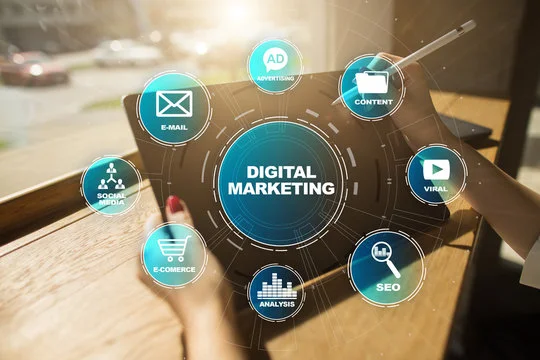
Digital marketing business technology concept. Website advertisement email social media network, SEO, SEM video and mobile application icons in virtual screen.
What Is a Digital Marketing Course?
A digital marketing course is a structured training program that teaches you how to promote products and services using online channels. Unlike traditional marketing, digital marketing focuses on platforms such as search engines, social media, email, websites, and mobile apps.
The goal is to provide both theoretical knowledge and practical exposure so you can execute real-world campaigns effectively.
Why Is Digital Marketing So Important?
The rise of platforms like Google, Facebook, Instagram, and YouTube has transformed the way consumers discover and interact with brands. Today, customers research products online before making purchase decisions.
Here’s why digital marketing matters:
Global Reach – Businesses can target audiences worldwide.
Cost-Effective – More affordable than traditional advertising.
Measurable Results – Track performance using analytics tools.
Targeted Marketing – Reach specific demographics.
Higher Engagement – Direct interaction with customers.
A digital marketing course teaches you how to leverage these platforms strategically to drive measurable growth.
Key Modules Covered in a Digital Marketing Course
1. Search Engine Optimization (SEO)
SEO is the process of optimizing websites to rank higher on search engines like Google. A course will teach you:
Keyword research
On-page and off-page SEO
Technical SEO
Link building strategies
Local SEO
With SEO skills, you can increase organic traffic and improve website visibility.
2. Social Media Marketing (SMM)
Social media platforms such as Facebook, Instagram, LinkedIn, and Twitter allow brands to engage directly with audiences.
You’ll learn:
Content planning and scheduling
Running paid ad campaigns
Audience targeting
Influencer marketing
Performance tracking
3. Pay-Per-Click Advertising (PPC)
PPC involves running paid ads on search engines and social media platforms. With tools like Google Ads, marketers can create highly targeted campaigns.
A digital marketing course teaches:
Ad creation
Budget management
Bidding strategies
Conversion tracking
ROI analysis
4. Content Marketing
Content is the backbone of digital marketing. You’ll learn how to create blogs, videos, infographics, and social posts that attract and convert audiences. Platforms like YouTube play a major role in video marketing strategies.
5. Email Marketing
Email marketing remains one of the highest ROI channels. Courses cover:
Email list building
Automation tools
Campaign design
A/B testing
Personalization strategies
6. Web Analytics
Understanding data is crucial. Tools like Google Analytics help marketers track traffic, user behavior, and conversions. A course teaches you how to interpret data and optimize campaigns accordingly.
Who Should Enroll in a Digital Marketing Course?
A digital marketing course is ideal for:
Students looking for career-oriented skills
Entrepreneurs wanting to grow their business online
Freelancers seeking high-income opportunities
Marketing professionals upgrading their skills
Job seekers aiming for in-demand roles
No technical background is required. Most courses start from basics and gradually move to advanced strategies.
Career Opportunities After Completing a Digital Marketing Course
Digital marketing offers diverse and lucrative career paths. Some popular roles include:
Digital Marketing Executive
SEO Specialist
Social Media Manager
PPC Expert
Content Strategist
Email Marketing Specialist
Web Analytics Expert
Affiliate Marketer
With experience, professionals can become Digital Marketing Managers, Growth Hackers, or even start their own agencies.
Companies across industries—from startups to multinational corporations—are actively hiring digital marketing experts.
Benefits of Taking a Digital Marketing Course
1. High Demand & Job Security
The digital economy is expanding rapidly, and skilled professionals are needed across sectors.
2. Flexible Career Options
Work full-time, freelance, or remotely from anywhere in the world.
3. Entrepreneurial Advantage
Business owners can save marketing costs and scale faster.
4. Attractive Salary Packages
Certified digital marketers often command competitive salaries.
5. Continuous Learning
Digital marketing evolves constantly, keeping your career dynamic and exciting.
Online vs Offline Digital Marketing Courses
Today, many institutions offer both online and classroom-based training.
Online Courses:
Flexible timing
Self-paced learning
Affordable
Access from anywhere
Offline Courses:
Face-to-face interaction
Structured schedule
Networking opportunities
Choose based on your learning preference, budget, and availability.
How to Choose the Right Digital Marketing Course
Before enrolling, consider:
Course curriculum depth
Practical projects & case studies
Internship opportunities
Industry-recognized certification
Trainer experience
Placement assistance
Reviews and testimonials
A good course should focus more on hands-on practice than just theory.
The Future of Digital Marketing
With advancements in Artificial Intelligence (AI), automation, voice search, and data-driven marketing, digital marketing is becoming more sophisticated. Businesses are investing heavily in online branding and performance marketing.
As internet penetration continues to grow worldwide, digital marketing will remain one of the most promising career fields.
Final Thoughts
A digital marketing course is more than just a certification—it’s a gateway to endless opportunities. In a world dominated by online interactions, digital skills are no longer optional; they are essential.
Whether you aim to secure a high-paying job, grow your own business, or build a freelance career, mastering digital marketing can transform your professional journey.
If you’re ready to step into a fast-growing industry with global potential, enrolling in a digital marketing course could be your first step toward success.