The history of Ambala is a fascinating journey through ancient settlements, medieval power struggles, colonial military expansion, and post-independence development. Located in the northern Indian state of Haryana, Ambala has long served as a strategic, cultural, and commercial center in North India. Its geographical position—close to Punjab, Himachal Pradesh, and Uttar Pradesh—has made it a gateway city with immense historical importance.
From ancient legends and Mughal administration to British cantonment development and its role in modern India, Ambala’s past reflects the broader narrative of North Indian history.
Ancient Origins and Etymology History of Ambala
The origin of the name “Ambala” is surrounded by local legends and historical interpretations. One popular belief suggests that the city was named after “Amba Rajput,” a local ruler who is said to have founded the settlement. Another theory connects the name to Goddess Amba, an incarnation of Goddess Durga, indicating the region’s early religious roots.
Archaeological findings in nearby areas suggest that this region may have been inhabited since ancient times. Given its location between the rivers Yamuna and Sutlej, the land around Ambala was fertile and suitable for early settlements.
Though there is limited documented evidence from the ancient period, historians believe the region was influenced by various northern Indian kingdoms that ruled parts of present-day Haryana and Punjab.
Ambala During the Medieval Period
The medieval history of Ambala is closely tied to the rise and fall of powerful dynasties in North India. During the 12th and 13th centuries, the region came under the control of the Delhi Sultanate. Its proximity to Delhi made it strategically important for rulers who wanted to secure trade routes and military pathways.
Under the Mughal Empire, Ambala became part of the administrative framework of northern India. The Mughals developed infrastructure, trade networks, and agricultural systems in the region. Due to its fertile plains and strategic location, Ambala served as a connecting route between Delhi and Lahore, which was one of the most significant cities in the Mughal Empire.
After the decline of the Mughals in the 18th century, the region experienced political instability. Various powers, including the Marathas and local Sikh chiefs, attempted to gain control. Eventually, the Sikh Misls (confederacies) exerted influence over the area before the arrival of the British.
British Rule and the Establishment of Ambala’s history
One of the most defining chapters in the history of Ambala began with British rule. After the Second Anglo-Sikh War in 1849, the British East India Company gained control over Punjab and surrounding areas, including Ambala.
In 1843, even before full annexation, the British had established the Ambala Cantonment, recognizing the city’s strategic military value. The cantonment soon became one of the largest and most important military bases in northern India. It was designed to house British troops and serve as a defense post against potential uprisings and external threats.
Ambala played a significant role during the Revolt of 1857, also known as India’s First War of Independence. The cantonment was a key military center from which the British managed troop movements. Though unrest occurred in various parts of North India, the British maintained control over Ambala.
The British also developed railways, roads, churches, and administrative buildings in the city. The introduction of the railway system transformed Ambala into a major railway junction, strengthening its commercial and military significance.
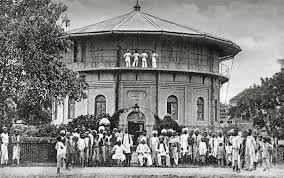
Ambala’s Role in India’s Freedom Movement
While Ambala was a stronghold of British military power, it was not untouched by India’s freedom struggle. Political awareness grew in the early 20th century, and local leaders participated in national movements led by figures such as Mahatma Gandhi.
During movements like the Non-Cooperation Movement and Quit India Movement, people in Ambala joined protests and demonstrations against colonial rule. The city’s strategic location meant that it was closely monitored by British authorities, especially due to the presence of the cantonment.
By the 1940s, as India’s independence became inevitable, Ambala witnessed increasing political activity and communal tensions, especially as the Partition of India approached.
Partition of 1947 and Its Impact on Ambala
The Partition of India in 1947 deeply affected Ambala. With the creation of Pakistan and independent India, massive population exchanges took place across Punjab and Haryana.
Ambala, being close to the newly formed border, became a transit point for refugees. Thousands of displaced families arrived from West Punjab (now in Pakistan), bringing with them new skills, traditions, and businesses. This migration significantly shaped the demographic and cultural character of the city.
The resettlement of refugees contributed to the growth of trade and industry in Ambala. Many refugee families established businesses that later flourished, particularly in textiles and scientific instruments.
Post-Independence Development and Formation of Haryana
After independence, Ambala initially became part of the state of Punjab. However, in 1966, the state of Haryana was carved out of Punjab based on linguistic divisions. Ambala was incorporated into the newly formed state of Haryana.
As Haryana developed into an agriculturally and industrially progressive state, Ambala emerged as an important urban center. Its cantonment continued to serve as a vital base for the Indian Army and Indian Air Force.
The city’s railway junction remained one of the busiest in North India, connecting major routes such as Delhi–Kalka and Delhi–Amritsar.
Industrial and Commercial Growth in Modern Ambala
The modern history of Ambala is marked by rapid commercial and industrial expansion. The city gained national recognition as a hub for scientific instruments and laboratory equipment manufacturing. Educational institutions across India source laboratory tools from Ambala, earning it the nickname “Science City of India” in trade circles.
In addition to scientific instruments, Ambala became known for:
- Textile wholesale markets
- Metal utensils and home goods
- Pharmaceuticals
- Small-scale manufacturing industries
The entrepreneurial spirit of its residents, many of whom were refugees after Partition, played a significant role in shaping Ambala’s economic identity.
Religious and Cultural Heritage
Ambala’s history is also reflected in its religious sites. Gurudwaras, temples, mosques, and churches coexist peacefully, symbolizing communal harmony. Sites such as Badshahi Bagh Gurudwara and Holy Redeemer Church stand as reminders of the city’s diverse spiritual heritage.
This blend of faiths and traditions has been shaped over centuries by migration, trade, and political change.
Conclusion: The Historical Legacy of Ambala
The history of Ambala is a rich tapestry woven with ancient legends, medieval conquests, colonial military strategies, freedom struggles, and post-independence growth. From its strategic importance during the Mughal era to its transformation into a major British cantonment, and from the turbulence of Partition to its rise as a commercial powerhouse, Ambala has continuously evolved.
Today, Ambala stands as a symbol of resilience and progress. Its historical roots continue to influence its cultural identity, while its modern industries and military presence ensure its ongoing relevance in India’s development story.
For historians, travelers, and residents alike, Ambala’s past offers valuable insights into the broader narrative of North Indian and Indian history.
Leave a Reply